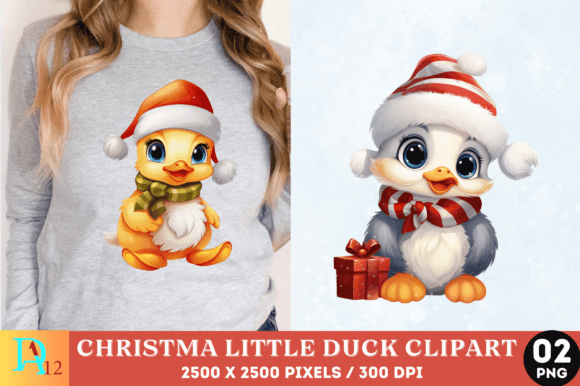
Review: Christmas Cute Little Duck Clipart & Illustrations
As a graphic designer who spends the majority of my week juggling brand identities, seasonal marketing campaigns, and print-on-demand product lines, I have developed a keen eye for what makes a graphic design asset truly viable. It is not just about whether an image looks pretty in isolation; it is about how it performs when placed into a real-world layout, how it scales on a physical product, and whether it communicates the right emotional tone to the target audience. Recently, I had the opportunity to integrate Christmas Cute Little Duck Clipart into a project for a small handmade business specializing in holiday stationery and children’s apparel. Here is my professional assessment of this asset from the perspective of practical, client-facing design work.
First Impressions and Visual Mood
The initial appeal of Christmas Cute Little Duck Clipart lies in its ability to balance whimsy with seasonal warmth. In the crowded landscape of holiday illustrations, it is easy to find assets that feel generic or overly cluttered. However, this particular set offers a clean, approachable aesthetic that feels modern yet nostalgic. The lines are smooth, suggesting high-quality vector origins, which is crucial for any designer planning to scale the artwork for large format prints like posters or tote bags.
The mood created is distinctly cheerful and inviting. For a client targeting families, young parents, or the "cozy home" demographic, this visual language hits the mark. It avoids the harshness of some traditional corporate holiday graphics, opting instead for a softer, more hand-drawn feel. This makes it an excellent candidate for brands that want to appear accessible, friendly, and authentic. When I first dropped these elements into a mockup for a holiday greeting card, the immediate reaction from the client was positive. The duck characters served as an emotional anchor, drawing the eye and creating a sense of playful engagement before the viewer even read the text.
Performance in Real Design Scenarios
The true test of any digital product is its versatility across different mediums. I tested Christmas Cute Little Duck Clipart across several common use cases to evaluate its flexibility.
- Packaging Design and Labels: For small business owners selling handmade soaps, cookies, or candles, packaging is the primary touchpoint. These illustrations work exceptionally well on kraft paper labels or white sticker backgrounds. The clear outlines ensure that the design remains recognizable even when printed at smaller sizes, such as on jar lids or gift tags.
- Print-on-Demand and Apparel: I applied the assets to t-shirt designs and mug mockups. Because the clipart features distinct shapes and balanced negative space, it translates well to sublimation printing. The colors remain vibrant, and the details do not get lost in the fabric texture, making it a strong choice for sublimation design projects.
- Social Media Graphics: For marketers creating Instagram posts or Pinterest pins, these elements act as perfect decorative accents. They break up text-heavy layouts and add a festive touch without overwhelming the core message. I found them particularly effective in Canva templates, where users can easily drag and drop the PNG files onto existing backgrounds.
- Cricut and Craft Projects: If you are working with cutting machines, the potential for SVG files is significant. While I primarily reviewed the raster images, the clean edges suggest that a corresponding SVG design would cut cleanly for sticker sheets, iron-on transfers, or paper crafts. This expands the utility for crafters and Etsy sellers looking to create physical goods.
Strategic Placement and Visual Hierarchy
Understanding where to place an asset is just as important as the asset itself. Christmas Cute Little Duck Clipart shines when used as a hero graphic or a focal point in a minimalist layout. In these scenarios, the character drives the narrative, allowing the typography to support rather than compete. I recommend using these illustrations in large layout areas, such as the center of a holiday flyer or the front of a greeting card, where they can command attention.
However, designers must exercise caution when using these assets in crowded compositions. Because the style is inherently cute and detailed, placing multiple ducks alongside complex patterns or busy backgrounds can reduce visual clarity. In low-contrast designs, the softer edges might blend into the background, causing the image to lose impact. Therefore, it is best suited for designs with ample white space or solid color blocks that allow the illustration to breathe. Avoid using them in strictly corporate or minimalist branding projects where a sleek, abstract aesthetic is required, as the playful nature of the duck may clash with a serious brand identity.
Typography Pairing and Brand Consistency
A critical aspect of integrating any clipart into a professional design is typography selection. I experimented with various font styles to see what complemented the Christmas Cute Little Duck Clipart best. Serif fonts added a traditional, storybook quality, which worked well for printed invitations. Sans serif fonts provided a modern, clean contrast that suited digital ads and web banners. Script and handwritten fonts enhanced the handmade, personal feel, making them ideal for Etsy product listings and personalized gifts. Display fonts, when used sparingly, added a fun, energetic vibe suitable for children’s products.
Consistency is key. If you are building a brand identity around these illustrations, ensure that the color palette of your text and background elements harmonizes with the colors in the duck artwork. This creates a cohesive look that builds visual trust and recognition among your audience.
Practical Designer Notes for Commercial Use
Before finalizing any client project, there are technical checks every professional should perform. Here are my recommendations for working with this asset:
- Check File Formats: Confirm whether you have access to both PNG and SVG files. PNGs with transparent backgrounds are essential for layering in Photoshop or Canva, while SVGs are necessary for scalable vector editing in Illustrator or for cutting machines.
- Test Contrast and Readability: Always preview the illustration on both light and dark backgrounds. Ensure that the details of the duck’s features remain visible and that the image does not disappear into the background color.
- Verify Licensing: For any commercial design, especially for print-on-demand or digital sales, double-check the commercial license terms. Ensure that the commercial license covers your specific use case, whether it is for physical products, digital downloads, or marketing visuals.
- Mockup Testing: Never rely solely on screen previews. Print a test sample if possible, or use high-fidelity product mockups to see how the colors translate to physical materials. This is crucial for maintaining professionalism and avoiding costly reprints.
- Evaluate Visual Hierarchy: Ensure that the clipart supports the main message of your design rather than distracting from it. Adjust size and placement to guide the viewer’s eye naturally through the layout.
In conclusion, Christmas Cute Little Duck Clipart is a versatile and charming addition to any designer’s toolkit. It offers a unique blend of holiday spirit and playful character that resonates well with modern consumers. Whether you are creating marketing visuals, designing packaging, or developing Etsy products, this asset provides a solid foundation for creative and engaging designs. By following best practices for placement, typography, and technical preparation, you can leverage these illustrations to elevate your projects and deliver polished, professional results that clients and customers will love.