Reviewing the Merry Christmas Messy Bun Sublimation Design
As a designer who has spent countless hours digitizing and stitching out holiday motifs, I approach every new Merry Christmas Messy Bun Sublimation file with a mix of excitement and skepticism. The "messy bun" trend has become a staple in modern craft culture, representing a relaxed, relatable aesthetic that resonates deeply with today’s consumers. However, translating a sublimation graphic into a tangible machine embroidery design requires more than just converting pixels to stitches. It demands an understanding of thread tension, fabric behavior, and visual hierarchy. In this review, I am evaluating how this specific illustration holds up when moved from a digital screen to a real-world embroidery project.
First Impressions and Visual Personality
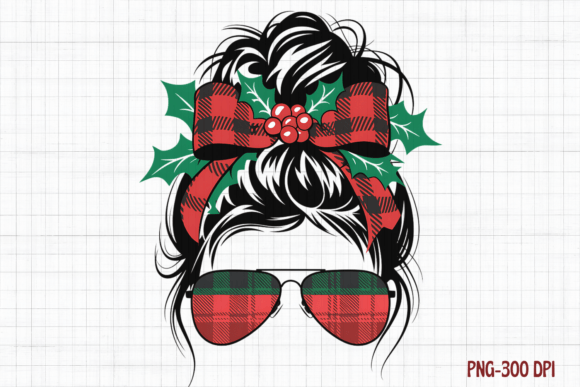
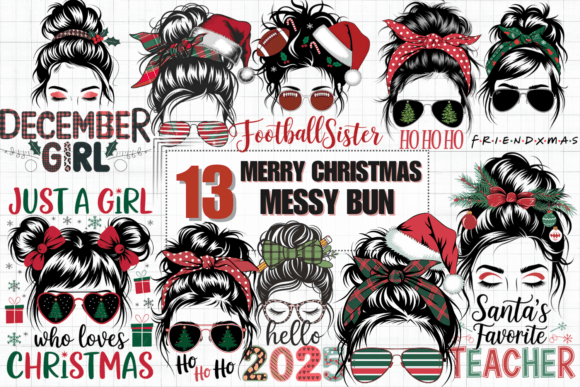
The immediate appeal of the Merry Christmas Messy Bun Sublimation lies in its casual charm. Unlike rigid, traditional holiday monograms, this design captures a sense of movement and personality. The silhouette suggests a woman with her hair up, likely wearing a festive headband or bow, which instantly categorizes it as a lifestyle-oriented piece. For Etsy sellers and small shop product creators, this mood is crucial. It speaks directly to the target demographic: women who appreciate handmade items but want them to feel current and fun rather than formal.
From a layout perspective, the design balances negative space well. In the realm of Illustrations, clutter is the enemy of clarity. When we look at this asset, we see defined shapes that should translate reasonably well into satin and fill stitches. The key question for any craft business owner is whether the details are too fine for standard home embroidery machines. My initial assessment suggests that while the concept is strong, the execution in thread will depend heavily on how the digitizer handled the transition between the hair texture and the facial outline.
Real-World Application: The Holiday Sweatshirt Test
To truly judge a design, you must imagine it on a finished garment. I envisioned using this Merry Christmas Messy Bun Sublimation on a heather grey crewneck sweatshirt. This is a high-demand item for Q4 sales. The goal was to create a personalized gift that feels boutique-quality. When placing the design on the left chest area, the scale needs to be precise. If the design is too large, it loses its subtle appeal; too small, and the details get lost in the fabric pile.
In this scenario, the thread colors become critical. A sublimation file might rely on gradients, but embroidery relies on solid color blocks. I would recommend using a variegated thread for the hair portion to mimic the depth seen in the original illustration. For the text or festive elements, a classic red or green satin stitch provides necessary contrast. This approach turns a simple sweatshirt embroidery job into a textured, eye-catching piece that customers are willing to pay a premium for.
Considerations for Different Fabrics
Not all fabrics behave the same way. While cotton tote bags are forgiving, stretchy knits used in custom apparel can distort a design if not stabilized correctly. When working with the Merry Christmas Messy Bun Sublimation on a t-shirt, I strongly advise using a cut-away stabilizer. This ensures that the weight of the stitches does not pull the fabric out of shape after washing. For structured items like caps or embroidered patch backings, a tear-away stabilizer might suffice, but the density of the stitch pattern must be checked to prevent puckering.
Dark fabrics present another challenge. If the original sublimation art uses light colors for highlights, these may not pop against black navy fleece. In such cases, an underlay stitch becomes vital. Testing the design on scrap fabric is non-negotiable. I always run a test stitch-out to check for thread breaks and to ensure that the stitch density is appropriate for the material. This step saves time and materials in the long run, protecting your reputation as a professional maker.
Navigating Technical Challenges
One common pitfall with character-based designs is the complexity of small details. Does the Merry Christmas Messy Bun Sublimation include tiny facial features or intricate bow patterns? If so, these areas need careful scrutiny. Small lettering or fine lines can easily turn into a tangled mess if the needle size is too large or the thread quality is poor. I recommend using a 75/11 embroidery needle and high-quality polyester thread for sharp definition.
Furthermore, consider the hoop size constraints. Most home machines have a 4x4 or 5x7 hoop. If the design is optimized for a larger commercial frame, it may need resizing. Resizing beyond ten percent can distort the aspect ratio, making the "messy bun" look stretched or squashed. Always check the aspect ratio lock when adjusting dimensions. For baby embroidery projects, such as onesies or burp cloths, a smaller version of the design is often preferred. Ensure that the simplified version still retains its recognizable shape without losing essential elements.
Commercial Viability and Brand Consistency
For commercial embroidery professionals, consistency is key. Using a design like Merry Christmas Messy Bun Sublimation across a product line helps build brand recognition. Whether it is on a tote bag design, a kitchen towel, or a pillow cover, the visual language should remain cohesive. This design fits well within a broader collection of holiday-themed design assets. It appeals to buyers looking for holiday embroidery that feels fresh and modern.
However, licensing is a critical factor. Before selling any finished product or including this in a digital bundle, verify the license terms. Some sublimation files are for personal use only, while others allow commercial application. As a responsible Etsy seller, ensuring you have the right to use the artwork in physical goods protects your business from legal issues. If the file is strictly for sublimation, you may need to commission a separate digitization for embroidery, unless the product explicitly includes an embroidery file format like PES, DST, or JEF.
Final Verdict and Practical Tips
The Merry Christmas Messy Bun Sublimation offers a strong foundation for holiday creations. Its strength lies in its relatability and trendy aesthetic. To maximize its potential, focus on high-contrast thread choices and proper stabilization. Use it to elevate simple items like aprons or tea towels into coveted handmade products. Remember to test on various fabric textures to gauge how the fill stitch and satin stitch interactions perform. With careful attention to detail, this design can become a bestseller in your winter catalog, appealing to customers who value both style and craftsmanship in their personalized gift selections.
Ultimately, the success of this design in your shop will depend on your execution. Treat it not just as a graphic, but as a structural element of your product. By respecting the limitations of the medium and leveraging the strengths of the illustration, you can create items that stand out in a crowded market. Keep your stitches clean, your tensions balanced, and your presentation professional, and this design will serve your craft business well throughout the holiday season and beyond.